What are digital marketing services, and why does every business need them in 2026?
Your customers are online. All of them. Global digital ad spend is expected to surpass $1 trillion in 2026, and businesses using professional digital marketing services are seeing up to 3x higher ROI than those still relying on traditional methods.
But most businesses struggle to turn that into real growth. Without a clear strategy, traffic stays unpredictable, leads stay inconsistent, and results stay frustrating.
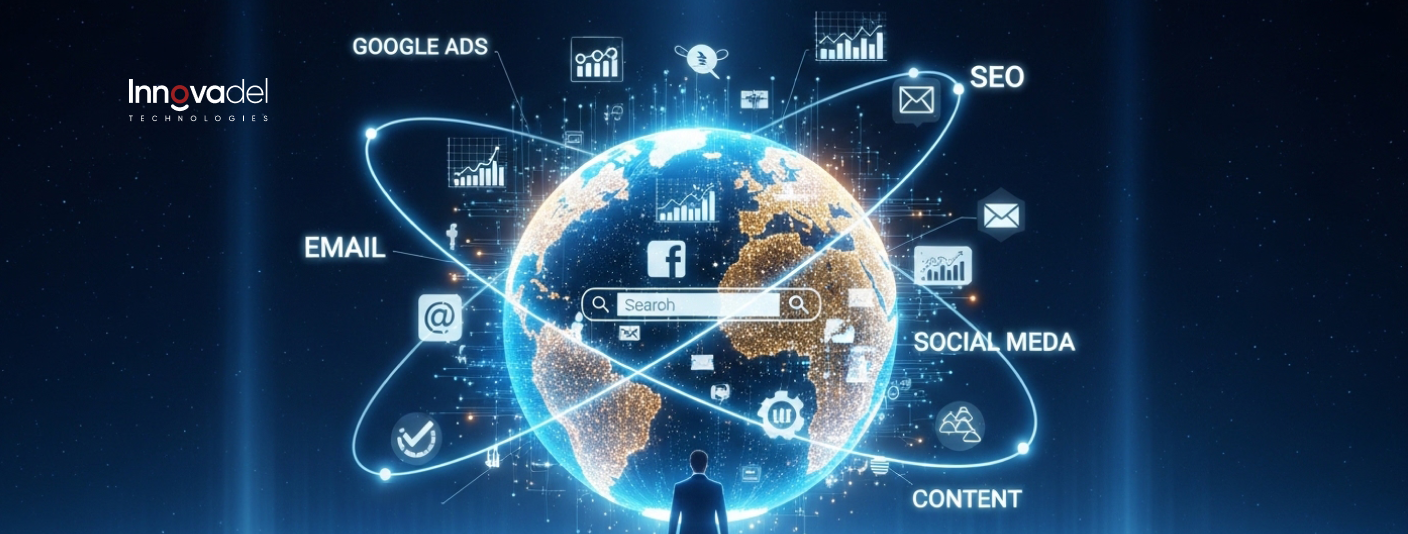
That is what digital marketing services are built to fix. SEO brings in free traffic from Google. Paid ads put you in front of people ready to buy. Email marketing turns one-time buyers into loyal customers. Every channel has a specific job to do.
This guide covers everything: what digital marketing services are, the different types, how they work, and how to build a strategy that delivers real, measurable results for your business.
Contents
- 1 What is Digital Marketing?
- 2 Benefits of Digital Marketing Services
- 3 Types of Digital Marketing Services
- 3.1 1. Search Engine Optimization (SEO) Services
- 3.2 2. Pay-Per-Click Advertising (PPC)
- 3.3 3. Social Media Marketing
- 3.4 4. Content Marketing
- 3.5 5. Email Marketing
- 3.6 6. Affiliate Marketing
- 3.7 7. Influencer Marketing
- 3.8 8. Native Advertising
- 3.9 9. Mobile Marketing
- 3.10 10. Online PR and Reputation Management
- 3.11 11. Inbound Marketing
- 3.12 12. Sponsored Content and Video Marketing
- 4 How to Create a Solid Digital Marketing Strategy for Your Business
- 5 Digital Marketing Tools That Actually Make a Difference
- 6 Why Choose Innovadel for Digital Marketing Services
- 7 FAQs
- 8 References
What is Digital Marketing?
Digital marketing services are professional strategies that help businesses reach their audience online, attract the right people, and turn that attention into real revenue.
Think about it this way. When someone needs a plumber, they Google it. When a founder is looking for a software tool, they search for it. When a teenager wants new shoes, they are on Instagram before they ever walk into a store. Your customers are already online, and digital marketing services make sure your business shows up when they are looking.
The biggest difference from traditional marketing is accountability. You know exactly where every lead came from, what campaign drove it, and what your money actually produced. No guesswork involved.
And the opportunity is hard to ignore. Over 97% of consumers search online before visiting a business. Google processes more than 8.5 billion searches every single day.
When done right, digital marketing does not just bring traffic; it brings the right people, at the right moment, ready to buy.
Benefits of Digital Marketing Services
Most businesses do not have unlimited budgets. Every rupee spent needs to count. That is exactly where digital marketing services deliver, not just in reach, but in results you can actually measure and improve over time.
- You stop guessing and start knowing. Every click, every lead, every sale is tracked. You know which campaign worked, which one flopped, and where to put your money next month. Tools like Google Analytics 4 give you a real-time picture of everything happening on your website.
- You reach the right people, not just more people. Digital marketing lets you target by location, age, interests, search behavior, and even buying intent. Instead of paying to reach thousands of random people, you reach hundreds who are already looking for what you sell.
- You get more for less. Content marketing costs 62% less than traditional marketing while generating 3x more leads. Email marketing returns $36–$45 for every $1 spent, still one of the highest ROI channels available. And organic search alone drives 53% of all website traffic worldwide.
- You can start small and scale fast. You do not need a massive budget to get started. Most small businesses begin with ₹20,000–50,000 per month and expand as results come in. Digital marketing grows with your business, not the other way around.
- You compete with businesses twice your size. With customer acquisition costs rising 40% across many industries, the businesses winning are not always the biggest; they are the smartest. A well-run digital marketing strategy levels the playing field in a way traditional advertising never could.
The shift most small business owners describe is simple: they stopped wasting money on things they could not measure and started investing in things they could prove were working.
Types of Digital Marketing Services
Digital marketing is not one single thing. It is a collection of channels and strategies, each doing a different job. Some build visibility. Some drive traffic. Some turn visitors into paying customers. The key is knowing which ones your business actually needs.
Here is a breakdown of every major type.
1. Search Engine Optimization (SEO) Services
Every day, Google processes more than 8.5 billion searches. SEO is how your business shows up in those results, without paying for every click.
It covers three core areas. On-page SEO makes sure your content, headings, and keywords are set up correctly. Technical SEO ensures your website loads fast, works on mobile, and can be properly crawled by search engines. Off-page SEO builds your authority through backlinks and brand mentions from other trusted websites.
In 2026, SEO has expanded to include Generative Engine Optimization (GEO), optimizing your content to appear inside AI-generated answers on Google, Perplexity, and ChatGPT Search. This is the next frontier of organic visibility.
The honest reality about SEO: results take 3–6 months to build. But once you rank, that traffic is free, consistent, and compounds over time. Businesses that blog consistently see up to 434% more indexed pages, and organic search still drives over 53% of all website traffic worldwide.
Best for: Businesses that want steady, long-term lead generation without relying entirely on paid ads.
2. Pay-Per-Click Advertising (PPC)
PPC puts your business at the top of Google or social media feeds immediately, and you only pay when someone actually clicks your ad.
It works across Google Ads, Facebook, Instagram, LinkedIn, and TikTok. You control the budget, choose exactly who sees your ads, and track every result in real time. In 2026, AI-powered bidding and automated creative testing have made PPC campaigns faster and more efficient than ever.
The catch is straightforward: the moment you stop spending, the traffic stops. That is why smart businesses run PPC alongside SEO, not instead of it.
Best for: Product launches, seasonal promotions, and any time you need traffic and leads fast.
3. Social Media Marketing
Over 5 billion people use social media globally. Social media marketing is how your business shows up in that space, not just with ads, but with content that builds genuine trust and community over time.
Services include organic content strategy, community management, paid social campaigns, and influencer partnerships. Short-form video, Instagram Reels, TikTok, and YouTube Shorts dominates attention in 2026, and social platforms are increasingly acting as both search engines and shopping destinations.
The platform that matters most depends on your audience. LinkedIn for B2B. Instagram and TikTok for consumer products. Facebook for local businesses and community-driven brands.
Best for: E-commerce, local businesses, and brands looking to build loyal audiences.
4. Content Marketing
Content marketing is about creating useful, relevant content that attracts your ideal customer and builds enough trust that they choose you when they are ready to buy.
Blog posts, videos, guides, case studies, infographics, and podcasts all fall under this category. Every piece of quality content you publish works for your business around the clock. A well-written blog post can bring in leads for years after it is published.
Content also powers every other channel. Your SEO needs content. Your social media needs content. Your email campaigns need content. It is the foundation on which everything else is built on.
Businesses that publish content consistently generate 3x more leads than those relying on outbound tactics, at 62% lower cost.
Best for: B2B companies and service businesses building long-term authority in competitive markets.
5. Email Marketing
Email is one of the most underestimated channels in digital marketing and one of the best performing. It delivers an average return of $36 to $45 for every $1 spent, which is hard to beat.
What makes it so effective is simple. You are not competing with a social media algorithm. You land directly in someone’s inbox. With the right segmentation and automation in place, email turns one-time buyers into repeat customers and keeps your brand front of mind between purchases.
More than 4.7 billion people use email worldwide, which is more than any social media platform on earth.
Best for: Every business, especially for repeat sales, customer retention, and nurturing leads over time.
6. Affiliate Marketing
Affiliate marketing lets bloggers, influencers, and content creators promote your products and earn a commission on every sale they generate. You only pay for actual results, making it one of the most cost-efficient ways to expand your reach.
The global affiliate marketing industry is projected to approach $48 billion by 2027, with over 80% of brands already using it in some form.
Best for: E-commerce brands and digital products looking to grow without increasing upfront ad spend.
7. Influencer Marketing
People trust people more than they trust brands. Influencer marketing works by partnering with creators who already have the attention and trust of your target audience.
In 2026, micro-influencers, creators with smaller but highly engaged followings, are consistently outperforming big-name celebrities for conversion rates. Authenticity matters more than reach.
Best for: Consumer brands, lifestyle products, and businesses trying to reach younger audiences quickly.
8. Native Advertising
Native advertising blends promotional content into the natural look and feel of the platform it appears on, sponsored articles, in-feed social posts, and recommended content, rather than disrupting the user experience with banner ads.
Because it does not feel like an ad, it gets read. The native advertising market is projected to exceed $165 billion in 2026, driven by the simple fact that people engage with it far more than traditional display advertising.
Best for: Brands that want to educate and build credibility rather than push a hard sell.
9. Mobile Marketing
Over 60% of all internet traffic now comes from mobile devices. Mobile marketing reaches your customers on their phones through push notifications, SMS, in-app ads, and location-based messages.
In the UK, where most people browse on their phones, having a mobile-first approach is not something extra. It is something every business needs to get right.
Best for: Local businesses, restaurants, retail brands, and anyone targeting customers on the go.
10. Online PR and Reputation Management
What people find when they search your business name matters more than most businesses realise. Online PR is about building and protecting that reputation through media coverage, review management, thought leadership, and press outreach.
A strong reputation makes people more comfortable buying from you. And that kind of trust is something no paid ad can create on its own.
Best for: Service businesses, B2B brands, and any business where trust plays a big role in the buying decision.
11. Inbound Marketing
Inbound marketing takes a different approach. Instead of pushing ads in front of people, you create content and experiences that naturally bring them to you.
It connects SEO, content, social media, and email into one system that works together. The leads it brings in tend to be better quality too, because people already understand what you offer before they reach out.
Best for: Businesses that want steady, long-term growth rather than short-term results.
12. Sponsored Content and Video Marketing
Sponsored content is paid content like blogs, videos, webinars, and podcasts that focuses on giving value rather than making a hard sell. It is labeled as sponsored but reads like regular content, which is exactly why people engage with it.
Video marketing is now a must. YouTube, TikTok, Reels, and LinkedIn video are getting serious attention across every industry. A short, well-made video can do more for your brand than an entire page of written content.
Best for: Brands in competitive markets that need to build trust and stand out quickly.
How to Create a Solid Digital Marketing Strategy for Your Business
Most businesses jump straight into running ads or posting on social media without any real plan behind it. The result is wasted money, inconsistent results, and a lot of frustration.
A solid digital marketing strategy fixes that. It tells you where to focus, who to target, and what will actually bring results. Here is how to build one.
1. Start With Your Business Goals
Before anything else, get clear on what you want to achieve. Do you want more website traffic? More leads? More sales? Your marketing needs to connect to a real business goal. When that is clear, everything else becomes easier to plan.
2. Know Who You Are Talking To
You cannot market to everyone. Get specific about your ideal customer. How old are they? Where do they live? What problems are they trying to solve? The more clearly you understand that person, the easier it becomes to create content and campaigns that actually connect with them.
3. Look at What Your Competitors Are Doing
Spend some time looking at what other businesses in your industry are doing online. What platforms are they using? What content is getting attention? This is not about copying anyone. It is about finding gaps where you can do something better.
4. Know What Makes You Different
Why should someone choose your business over everyone else? It could be your pricing, your expertise, or the way you solve a problem nobody else is addressing well. Whatever it is, make sure it comes through clearly in your marketing.
5. Pick the Right Channels
Not every platform is right for every business. Focus on where your audience actually spends time. SEO builds long-term traffic. Social media grows your brand. PPC gets you quick leads. Email keeps your existing customers coming back. Start with one or two channels, do them well, and expand from there.
6. Set Goals You Can Measure
Vague goals lead to vague results. Instead of saying you want more sales, say you want to increase leads by 30% in the next three months. Specific goals keep your strategy focused and give you something real to track and improve every month.
7. Take Action and Track Your Results
A strategy that stays on paper does nothing. Start creating content, running campaigns, and showing up consistently. Track what is working and do more of it. Cut what is not. If you do not have the time or expertise to do it yourself, a good digital marketing agency can get you to results much faster.
Digital Marketing Tools That Actually Make a Difference
You can have the best strategy in the world, but without the right tools, execution becomes slow and hard to measure. Here are the essential tools every business should know about.
Google Analytics 4 (GA4)
This is the first tool any business should set up. It shows you where your website traffic is coming from, what pages people are visiting, and where they are dropping off. Without it, you have no real idea what is working and what is not.
Google Search Console
Think of this as your direct window into how Google sees your website. It tells you which keywords are bringing people to your site, which pages are showing up in search results, and whether Google is having any trouble reading your content. If you are serious about SEO, this tool is non-negotiable.
SEMrush or Ahrefs
These two are the most trusted tools for SEO research and competitor analysis. You can discover the right keywords to go after, see exactly what your competitors are ranking for, and monitor your own progress month by month. SEMrush works well for paid search research. Ahrefs is hard to beat when it comes to analysing backlinks.
Google Ads
This is where paid search campaigns live. Google Ads lets you place your business in front of people who are actively searching for what you offer. The targeting is precise, the reporting is clear, and when campaigns are managed properly, the return on investment is measurable and consistent.
Meta Ads Manager
For paid advertising on Facebook and Instagram, Meta Ads Manager is the tool to know. It gives you powerful audience targeting, the ability to test different creatives, and live performance data. For businesses selling directly to consumers, it is still one of the most effective paid platforms available today.
Mailchimp or Klaviyo
Both are strong email marketing platforms, but they serve slightly different needs. Mailchimp is a good starting point for businesses new to email marketing. Klaviyo is better suited for e-commerce because it connects directly with your store data to send more personalised campaigns. Either way, both give you automation, list segmentation, and full tracking on every email you send.
Hootsuite or Buffer
Posting consistently across multiple social media platforms takes more time than most people expect. Hootsuite and Buffer solve that by letting you plan, schedule, and publish everything from one place. They also show you how your content is performing so you know what your audience actually responds to.
Canva
Not every business has a designer on the team. Canva fills that gap. It lets you create professional looking graphics, social media posts, and marketing materials quickly and without any design experience. It is one of those tools that pays for itself in time saved almost immediately.
Hotjar
Hotjar records how real visitors move around your website. Through heatmaps and session recordings, you can see where people click, how far down the page they scroll, and where they give up and leave. That information tells you exactly what to fix to turn more visitors into customers.
AI Writing and Marketing Tools
Tools like ChatGPT, Jasper, and Copy.ai have become a regular part of marketing work in 2026. Marketers use them to come up with content ideas, put together first drafts, test email subject lines, and write different versions of ad copy. They do not replace good judgment or creative thinking, but they do take care of the time-consuming groundwork that used to eat up most of the day.
Why Choose Innovadel for Digital Marketing Services
There are hundreds of digital marketing agencies out there, all making the same promises. Innovadel is different. Here is why businesses choose them.
They Take Time to Understand Your Business First
Before any work begins, the team sits down to understand your business, your customers, and what you are trying to achieve. Every plan, every campaign, and every decision is built around that conversation from day one.
Over 15 Years of Experience
Innovadel has been helping businesses grow online for more than 15 years. That kind of experience means you are working with a team that has seen what works, learned from what does not, and knows how to get to results without wasting your time or budget.
One Team That Handles Everything
SEO, content, paid ads, social media. One team takes care of all of it. No dealing with multiple agencies. No gaps in communication. Just one focused plan with everyone working toward the same goal.
You Always Know What Is Happening
You get regular updates and straightforward reports without having to follow up or chase anyone. The team is easy to reach, honest about progress, and never leaves you wondering what is going on with your campaigns.
Your Money Is Always Tracked and Accounted For
Every campaign is monitored closely. What is working gets more attention. What is not gets fixed. You never have to guess where your budget is going.
Everything Is Built Around Your Business
No copy-paste strategies. Every plan is created specifically for your business, your audience, and your goals.
FAQs
What are Advertising Services?
Advertising services are paid promotional activities that help businesses reach their target audience through Google Ads, social media ads, display ads, and other paid channels to drive traffic, leads, and sales.
What are Digital Marketing Agency?
A digital marketing agency is a professional company that helps businesses grow online by managing their SEO, social media, paid ads, content, and email marketing to attract customers and increase revenue.
What are the Services of a Digital Marketing Agency?
A digital marketing agency typically offers SEO, pay-per-click advertising, social media marketing, content creation, email marketing, web design, and analytics to help businesses build a strong online presence and drive consistent growth.
What Does Digital Marketing Include?
Digital marketing includes SEO, paid advertising, social media marketing, content marketing, email campaigns, influencer marketing, and web analytics — all working together to help businesses reach the right audience and convert them into customers.
Who Needs Digital Marketing Services?
Any business that wants to grow online needs digital marketing services — from small local shops and startups to large enterprises. If your customers are online, digital marketing is how you reach, attract, and convert them.
References
- https://www.dentsu.com/news-releases/global-ad-spend-set-to-surpass-one-trillion-for-the-first-time-in-2026-as-the-algorithmic-era-redefines-growth
- https://contentmarketinginstitute.com/content-marketing-strategy/9-stats-that-will-make-you-want-to-invest-in-content-marketing
- https://trustarmarketing.com/generate-3x-as-many-leads-as-traditional-outbound-marketing-for-62-less-cost/
- https://www.emailmonday.com/email-marketing-roi-statistics/
- https://www.wsiworld.com/blog/why-email-still-delivers-the-highest-roi-in-2026-and-how-to-max-it
- https://www.forbes.com/advisor/business/software/email-marketing-statistics-mar-26/
- https://www.brightedge.com/blog/organic-share-of-traffic-increases-to-53
- https://www.archiveresale.com/blog/e-commerce-customer-acquisition-costs-strategies-to-bring-them-down
- https://www.brightlocal.com/research/local-consumer-review-survey/
- https://centerstreetdigital.com/97-of-consumers-are-searching-online-for-local-businesses/
- https://neilpatel.com/marketing-stats/google-daily-searches-breakdown/
- https://datareportal.com/social-media-users
- https://firstpromoter.com/blog/affiliate-marketing-statistics
- https://www.mordorintelligence.com/industry-reports/native-advertising-market